 Weather today
Georgia left off NATO summit partner list as critics decry isolation

Georgia’s political and civil society spheres have been gripped by a renewed debate over why its government was once again not invited to the NATO summit in Turkey and to regional political and security events, a possible sign of Tbilisi’s political isolation.
As with previous summits, NATO partner countries such as Qatar, the UAE, Japan, South Korea, New Zealand and Australia as well as Ukraine were invited to Ankara to attend events focusing on regional security, whereas, for the first time, former key NATO partner Georgia did not appear in the official summit programme nor in the accompanying forums.
Over the past decade, Georgia has consistently declared its approach to the EU and NATO as national strategies, but this time Tbilisi was absent from the alliance agenda, prompting a political debate in Georgia over whether the country has lost its political influence or relevance.
Georgia’s ruling party representatives claimed that the summit in Ankara did not include the type of meetings Georgia used to attend in the past and rejected accusations of political isolation.
Georgian Dream MP Irakli Kirtskhalia told the press in Tbilisi that “we have no problem attending the summit, ask the organizers why we are not represented.”
Georgia’s Foreign Ministry replied that Foreign Minister Maka Bochorishvili was going to attend a separate event in Turkey called “Allies in Ankara,” but that it was part of the Munich Security Conference, which critics noted was not connected to the NATO summit.
“This is an important opportunity for Georgia to present the country’s positions and its regional role to partners,” Botchorishvili said, describing the alternative event.
Opposition Lelo party representative Grigol Gegelia countered that, for the first time in Georgia’s history, the country is not represented at the NATO summit itself.
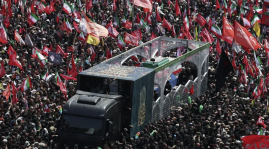
In turn, Georgian President Mikheil Kavelashvili travelled to Tehran to attend the funeral of the late Ayatollah Ali Khamenei, alongside a small number of other regional leaders.
Georgian political analyst Paata Zakareishvili has claimed that the absence of NATO’s invitation to its regional security debates represents what he called the loss of trust by Georgia’s partners.
“Georgia is being ignored. There is a view that it is better not to maintain relations with it because no one knows what information Georgia might pass on to Russia. Georgia is seen as an unreliable, vulnerable, and toxic state," Zakareishvili said.
“Georgia should have been present at this summit as an honoured guest,” he pointed out, given the country’s significance in the Black Sea and Caucasus.
“Countries that are not NATO members will attend the summit in Turkey. Georgia is a country aspiring to join NATO. Georgia and Ukraine used to move towards NATO membership together," Zakareishvili said.
"Georgia is no longer being considered anywhere. We are not meeting the required conditions and that is one of the reasons why we are not invited to join the group of countries we should have been part of,” he added.









 Studio One